Worked solution
Track five labelled points through eight transformations
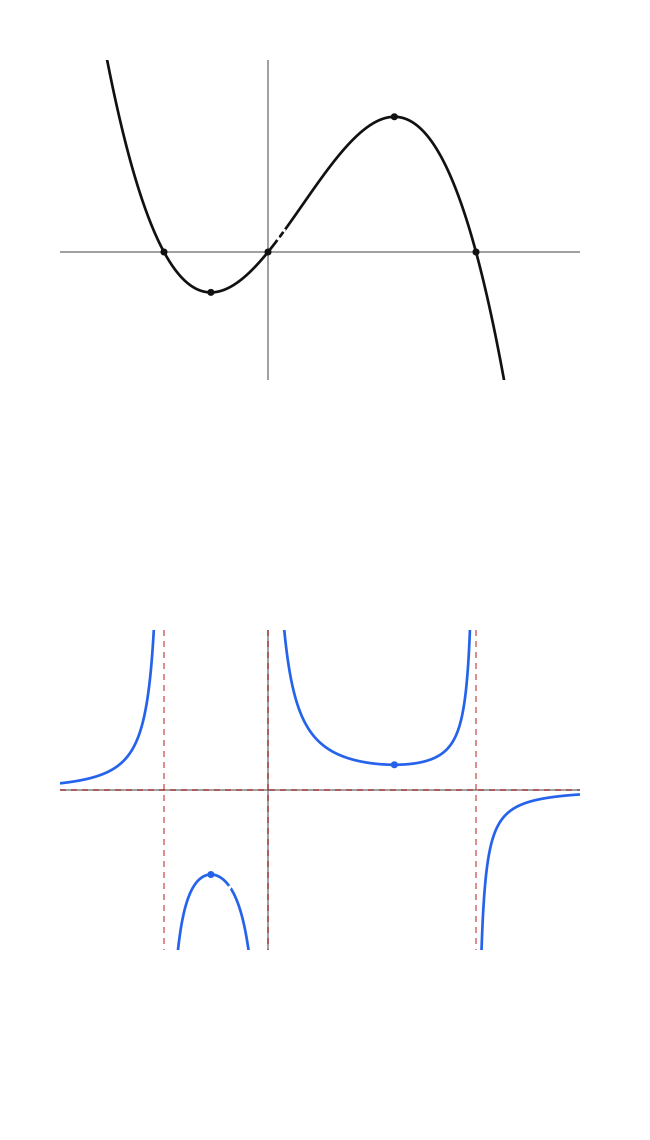
The graph of is shown, with , , , and . On separate diagrams, sketch (a) , (b) , (c) , (d) , (e) , (f) , (g) , (h) . Indicate clearly, if possible, all coordinates of points corresponding to A, B, C, D and E.
Expand diagramFit diagram to page
Use the scrollbars or arrow keys to inspect details.
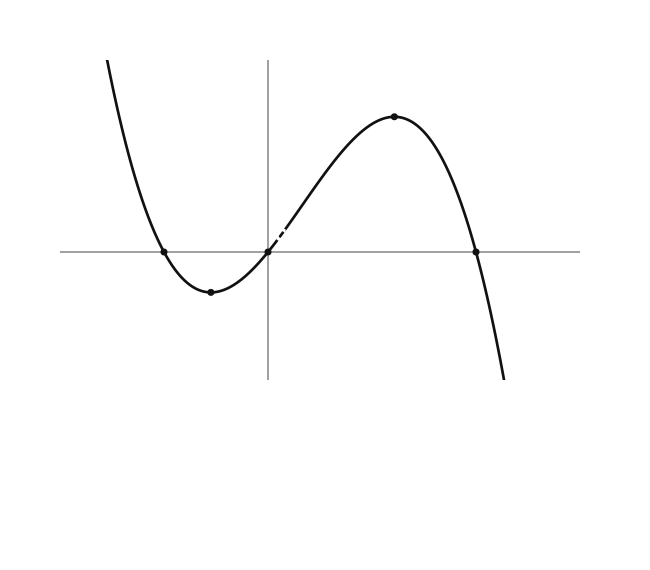
CJC · Transformations · Example 19
(a) Translate the whole graph right two
Answer
, , , , .
The Teacher asks that composite transformations and replacements be emphasised. Here replace x by : . The source gives the entire first transformed graph. All later coordinate calculations use the printed rounded B/D data consistently; they do not assert more precision for the underlying curve.
Expand diagramFit diagram to page
Use the scrollbars or arrow keys to inspect details.
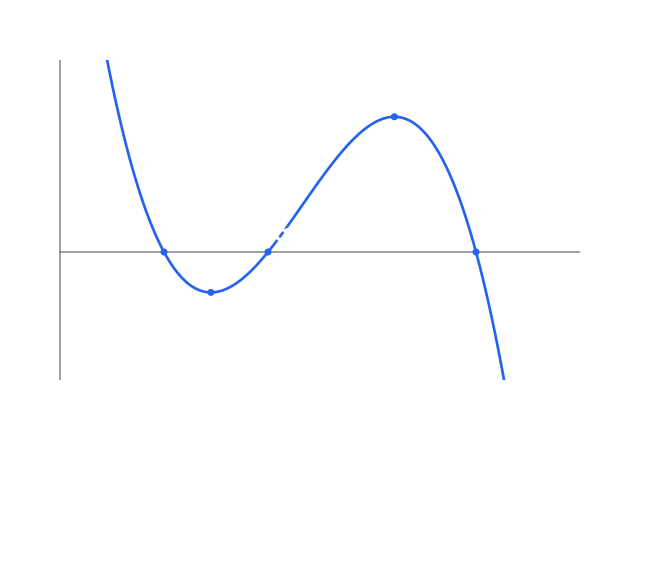
(b) Reflect, then translate up one
Answer
, , , , .
Replace x by to get , then y by to get . Intermediate points are , , , , . The overall map is . Both originals print ; the x-coordinate must be 0.549 from the given B. Preserve that source typo in native/review evidence; the answer and reconstructed graph use 0.549.
Expand diagramFit diagram to page
Use the scrollbars or arrow keys to inspect details.
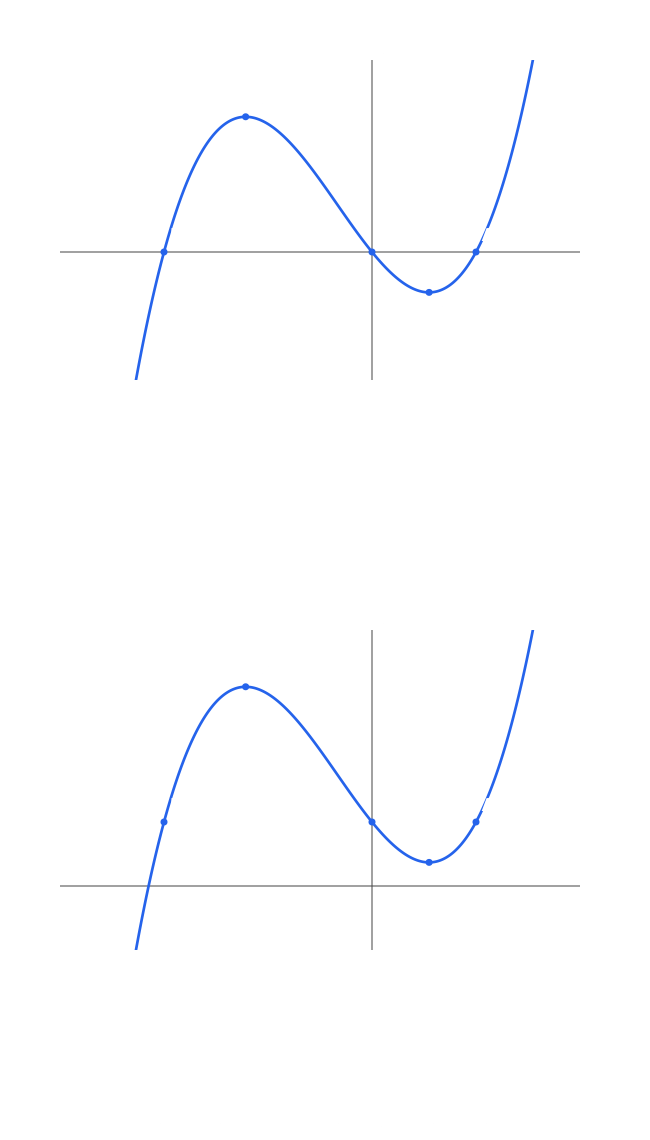
(c) Translate left, then halve horizontal distances
Answer
, , , , .
Translate left 1, obtaining ; then replace x by to obtain . The intermediate points are , , , , . The overall map is . The Teacher says this repeats Example 8 and need not be treated in detail again; reuse that replacement method while preserving both source diagrams and every coordinate here.
Expand diagramFit diagram to page
Use the scrollbars or arrow keys to inspect details.
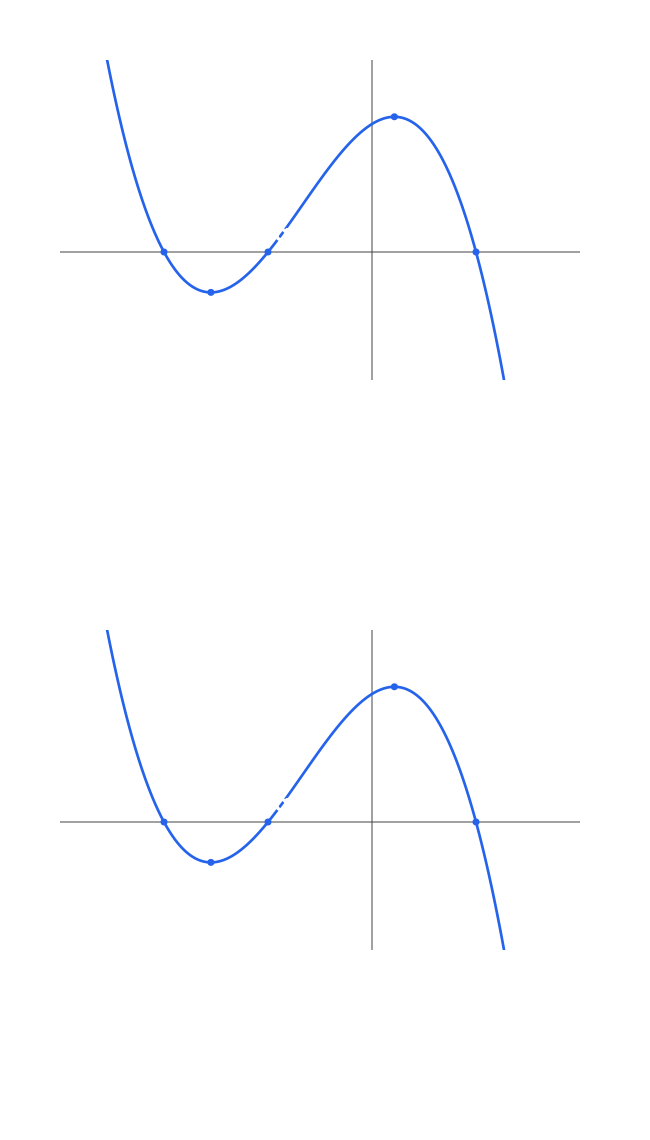
(d) Mirror the right side, then double outputs
Answer
C gives ; D gives ; E gives . A and B are discarded.
First retain original inputs and reflect them to form . The intermediate D images are and E images , with C unchanged. Then replace y by : , hence . The source final plot has doubled heights 4.226 but is mislabelled ; preserve that typo in native/review text and label the actual final graph with its factor 2. Negative-input A/B are not carried into this construction.
Expand diagramFit diagram to page
Use the scrollbars or arrow keys to inspect details.
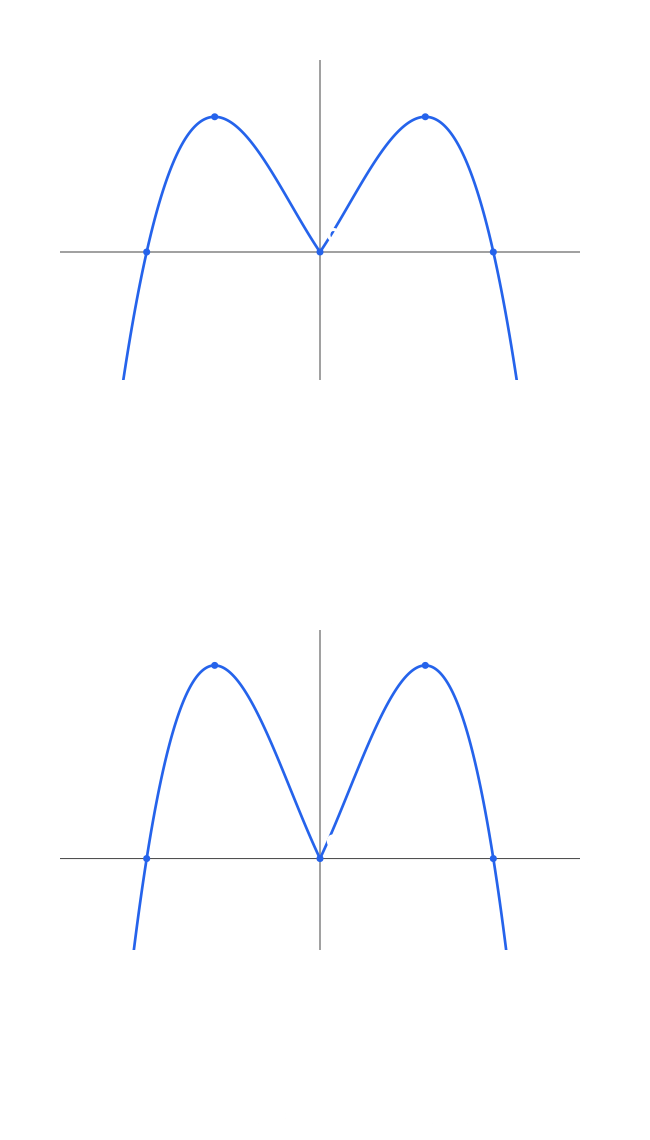
(e) Keep and mirror the original left side
Answer
A gives ; B gives ; C gives . D and E are discarded.
First reflect in the y-axis to obtain , with intermediate A′(1,0), B′(0.549,−0.631), C′(0,0), D′(−1.215,2.113), E′(−2,0). Retain the right-hand half of this reflected graph and mirror it to obtain . Equivalently, retain original inputs , then duplicate them symmetrically. The displayed intermediate and final source sketches are both retained.
Expand diagramFit diagram to page
Use the scrollbars or arrow keys to inspect details.
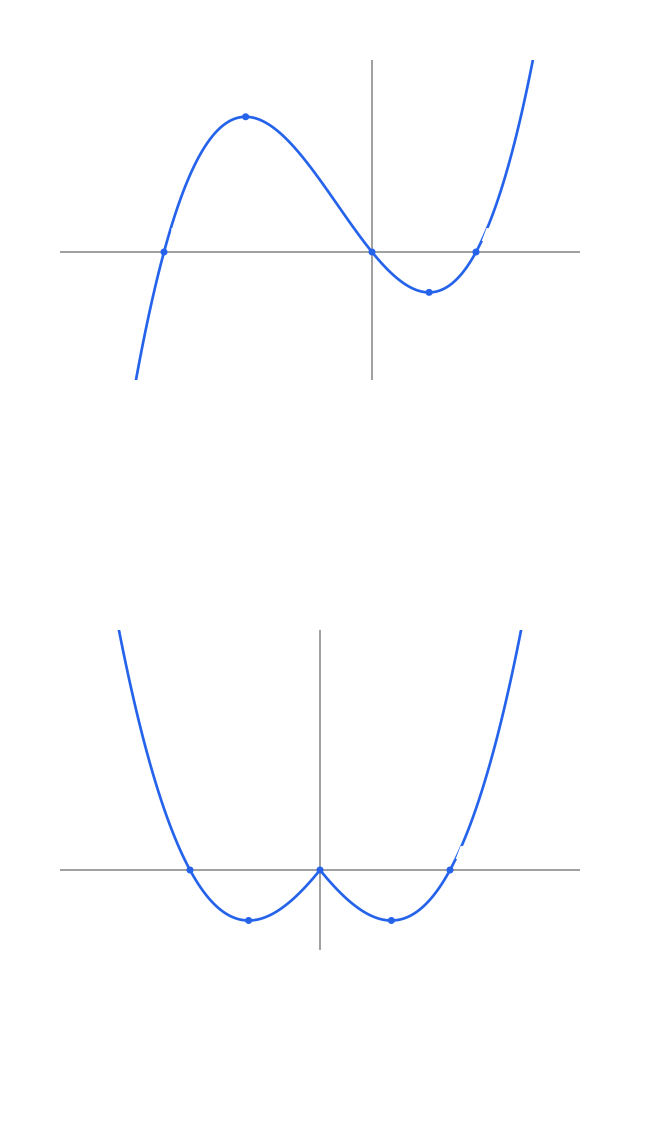
(f) Translate before taking output modulus
Answer
A gives , B gives , C gives , D gives , E gives .
Translate right 2 to obtain ; the intermediate coordinates are exactly those in part (a). Then reflect only the negative-output arcs in the x-axis, giving . The map is . B changes output sign; A/C/E stay on the axis and D stays above it. Both source stages and all coordinates are retained.
Expand diagramFit diagram to page
Use the scrollbars or arrow keys to inspect details.
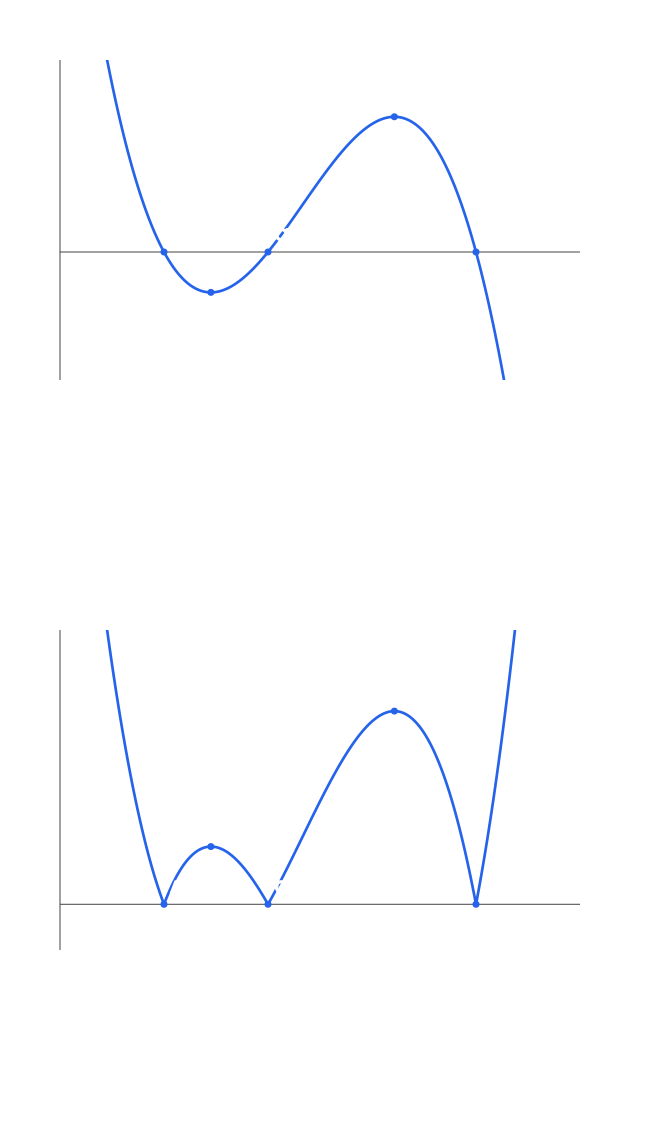
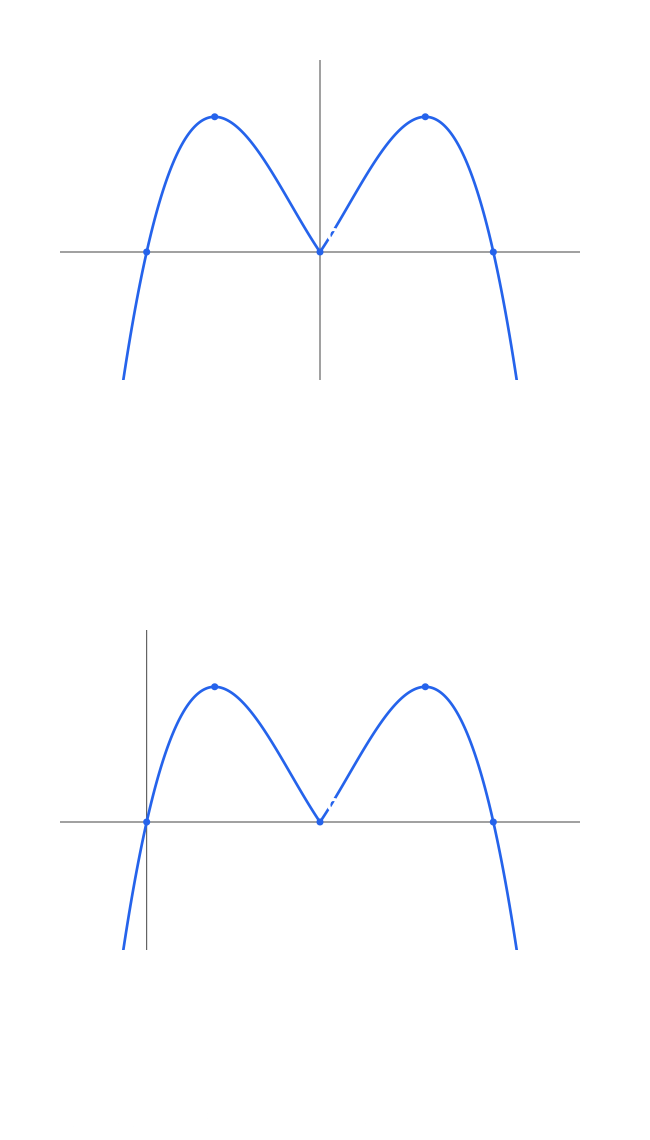
(g) Translate the input-modulus graph right two
Answer
C gives ; D gives and ; E gives and . A and B are discarded.
First retain the original side and mirror it: has C(0,0), D-images and E-images . Then replace x by to obtain , symmetric about . For each retained input p, the two images have x-coordinates . At p0 the two images coincide, so C is counted once. This differs from taking output modulus in part (f).
Expand diagramFit diagram to page
Use the scrollbars or arrow keys to inspect details.
(h) Reciprocate non-zero outputs
Answer
, ; vertical asymptotes and horizontal asymptote .
A, C and E have zero outputs, so they have no finite reciprocal images and their x-coordinates become poles in the supplied continuous sketch. From the printed rounded data, and . B becomes a local maximum and D a local minimum. Preserve all four reciprocal branches and the original unbounded tail behaviour, giving horizontal limit 0. The reciprocal is undefined at 0, so it has no y-intercept; it has no x-intercept either. The source repeats the original given diagram beside this reciprocal, and both are retained.
Expand diagramFit diagram to page
Use the scrollbars or arrow keys to inspect details.